
Yellowstone Sediments Reveal 15,000 Years of Environmental Change
Yellowstone sediments are giving scientists an extraordinary window into the environmental history of Yellowstone National Park, revealing how wildfire, climate, lakes, forests and hydrothermal activity changed over roughly 15,000 years.
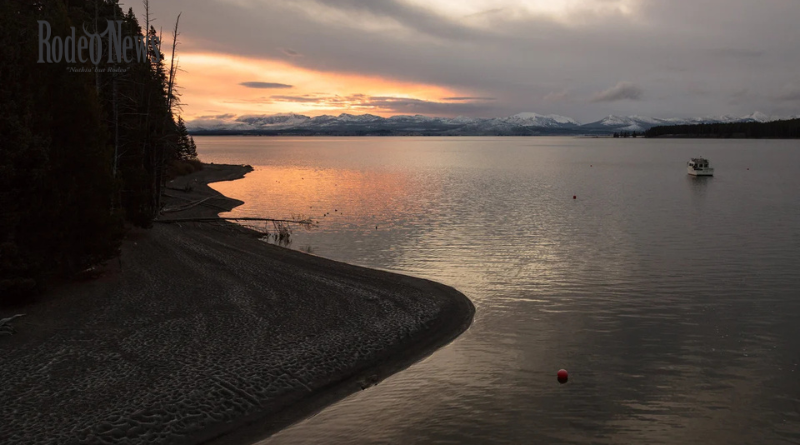
Researchers examined sediment cores from five lakes in the Lower Geyser Basin, Yellowstone’s largest thermal area. By analyzing pollen, charcoal, microscopic algae and chemical elements preserved in the sediments, scientists reconstructed how the landscape responded to changing climate conditions after the last ice age.
The research, published in the Proceedings of the National Academy of Sciences in August 2026, was led by researchers including Cathy Whitlock, Christopher Schiller and Steven Hostetler. The team combined evidence from lake sediments with independently developed regional climate simulations to understand not only what changed, but also why it changed.
The findings offer a detailed picture of Yellowstone’s past. They also provide clues about how a warmer and potentially drier future could affect the region.
Yellowstone Sediments Preserve an Ancient Environmental Record
Modern weather observations in Yellowstone only extend back a little more than a century. That is far too short to understand how the ecosystem behaved during major natural climate shifts.
Scientists therefore turn to natural archives.
Lake sediments are particularly valuable because material falling into a lake can accumulate layer by layer. Pollen can reveal which plants were growing nearby. Charcoal can indicate periods of significant wildfire activity. Diatoms, microscopic algae preserved in sediments, can provide information about lake conditions, including nutrient availability and changes in water levels.
Chemical elements can also preserve evidence of geological processes.
In this study, sedimentary arsenic and cesium helped researchers reconstruct changes in hydrothermal input, while pollen and charcoal provided information about vegetation and wildfire history.
Together, these clues created a long-term environmental record stretching back to the period following the retreat of Yellowstone’s glaciers.
Yellowstone Sediments Reveal a Strong Climate Connection
One of the study’s most important findings concerns the relationship between climate and hydrothermal activity.
The researchers found that hydrothermal input was generally greater during wetter periods. During drier intervals, hydrothermal contributions tended to decline.
The explanation involves Yellowstone’s underground plumbing system.
Rain and melting snow infiltrate the ground and circulate through the hot subsurface. That water helps supply Yellowstone’s hydrothermal system, which includes hot springs and geysers. When snowpack and moisture availability decrease, less water is available to recharge the system.
The sediment record therefore suggests that Yellowstone’s hydrothermal landscape has responded to changes in water availability for thousands of years.
Importantly, however, this does not mean that dry conditions eliminate volcanic or hydrothermal hazards.
The study does not establish a recurrence interval for hydrothermal explosions, nor does it predict future explosions. The researchers’ findings about reduced hydrothermal input during dry periods should not be interpreted as evidence that Yellowstone’s broader volcanic hazard has disappeared or become insignificant.
A Warmer and Drier Yellowstone Produced More Fires
The ancient climate record becomes especially striking between approximately 12,000 and 6,000 years ago.
During that period, summer solar radiation was about 8% greater than the pre-industrial reference used by the researchers. Climate simulations indicate that July through September temperatures were approximately 2.6 to 2.7 degrees Celsius warmer than the pre-industrial baseline.
At the same time, effective moisture was estimated to be 36% to 54% lower.
That combination created substantially drier summer conditions.
Another important measurement, known as vapor-pressure deficit, was approximately 29% to 56% higher than the pre-industrial reference. Vapor-pressure deficit is a measure of the atmosphere’s demand for moisture. Higher values generally mean that vegetation and soils can dry more quickly.
The ancient wildfire record reflects those conditions.
Charcoal preserved in the Yellowstone sediments indicates that wildfire activity was particularly high from roughly 12,000 to 4,000 years ago. The period of maximum fire activity therefore extended beyond the interval for which the researchers reconstructed detailed temperature and moisture conditions.
The evidence provides a long-term example of how warmer and drier conditions can alter fire activity across the Yellowstone landscape.
Yellowstone Lakes Became Shallower During the Dry Interval
The effects of the ancient climate shift were not limited to wildfire.
The lake sediments indicate that the study lakes became shallower and had lower nutrient levels during the warm, dry interval.
Diatoms were particularly useful in identifying these changes. Because different diatom communities thrive under different environmental conditions, their remains can act as biological indicators of past lake environments.
The researchers found that the aquatic ecosystems changed alongside the broader climate system.
This matters because Yellowstone’s lakes are connected to the surrounding landscape. Changes in precipitation, evaporation, vegetation and wildfire can affect how much water and material enter lakes and how those systems function over long periods.
The sediment record therefore provides evidence that climate-driven changes affected both terrestrial and aquatic environments.
Two Lakes May Have Formed After Hydrothermal Explosions
The study also provides clues about the origins of two of the five lakes.
Researchers concluded that two lakes probably formed following hydrothermal explosions near the end of the last glaciation, when glaciers were retreating across the Yellowstone region.
Hydrothermal explosions are different from conventional volcanic eruptions.
They can occur when heated water and steam become trapped underground. If pressure rises sufficiently, surrounding rock can fracture and the sudden expansion of steam and water can eject rock and sediment.
Yellowstone has experienced such events in the geological past. The U.S. Geological Survey has separately documented ancient hydrothermal explosion craters in the Yellowstone Plateau volcanic field.
The five-lake study, however, should not be treated as a prediction of when another explosion will occur.
Instead, the lake basins provide an unusual geological archive of what happened after these ancient events and how the surrounding environment evolved afterward.
Yellowstone Sediments Show Remarkable Forest Stability
Perhaps one of the more surprising findings involves Yellowstone’s forests.
Despite major changes in temperature, moisture, wildfire activity and hydrothermal input, lodgepole pine forests in the Lower Geyser Basin remained relatively stable after becoming established.
Pollen records indicate that lodgepole pine became established between approximately 12,800 and 11,000 years ago. Afterward, the composition and overall cover of the forest changed comparatively little despite substantial environmental variation.
Scientists attribute part of this stability to the area’s geology.
The Yellowstone Plateau contains extensive rhyolitic rocks that produce relatively nutrient-poor soils. Those conditions limit the range of plants capable of thriving there, helping constrain the composition of the forest.
The situation is different elsewhere in Yellowstone.
Where soils develop from different rock types and provide greater nutrient or moisture availability, vegetation has shown more substantial changes through time.
The finding demonstrates that climate alone does not determine how ecosystems respond. Geology, soil conditions and plant communities can also play major roles.
Earth’s Orbit Helped Shape Yellowstone’s Ancient Climate
The researchers also identified a much larger astronomical influence behind the environmental changes.
Following deglaciation, slowly changing seasonal solar radiation associated with cyclical variations in Earth’s orbit influenced temperature and moisture patterns in the Yellowstone region.
These orbital variations occur over very long timescales. They helped change the amount of solar energy received during different seasons, contributing to shifts in summer climate.
The researchers compared these independently generated climate simulations with evidence preserved in the lake sediments.
That combination is important.
Pollen, charcoal and other sediment indicators can reveal that an environmental change occurred, but interpreting the exact climate conditions behind that change can be difficult. Independent climate simulations provide another line of evidence.
The agreement between the two approaches strengthens the reconstruction of Yellowstone’s environmental history.
What the Yellowstone Sediments Could Mean for the Future
The ancient record also has implications for Yellowstone’s future.
The researchers note that modern climate change is placing stress on the same climate-hydrothermal relationships that operated in the region for thousands of years.
According to the U.S. Geological Survey’s summary of the research, projected warming in the Greater Yellowstone region could reduce snowpack substantially by mid-century. Less snow could contribute to greater late-summer dryness and wildfire activity while also reducing the amount of water available to recharge hydrothermal systems.
That does not mean scientists expect Yellowstone’s famous geysers to simply stop operating.
Instead, the research highlights how changes in water availability can influence hydrothermal behavior. Historical records have already shown connections between drought and changes in geyser activity.
For example, USGS researchers have previously documented periods when severe drought coincided with changes in activity at Old Faithful and Steamboat Geyser.
The new sediment study extends that understanding much farther into the past.
A 15,000-Year Natural Experiment
The significance of the research extends beyond Yellowstone itself.
The Lower Geyser Basin effectively provides a natural experiment spanning thousands of years. It contains evidence of glacial retreat, changing solar radiation, warmer and drier climates, intense wildfire periods, shifting lake conditions and variations in hydrothermal activity.
The key lesson is that these systems are connected.
Climate affects moisture availability. Moisture affects vegetation and fire conditions. Water availability also influences the recharge of Yellowstone’s underground hydrothermal system.
At the same time, geology can moderate the response. Lodgepole pine forests persisted through substantial environmental changes because the underlying rhyolitic landscape imposed strong ecological constraints.
The result is a complex picture rather than a single simple response.
Yellowstone Sediments Offer a Window Into a Changing Landscape
The latest research shows why lake sediments are so valuable to scientists studying Yellowstone.
A layer of sediment may appear unremarkable to the naked eye, yet it can contain microscopic evidence of ancient forests, wildfire, lake chemistry and hydrothermal activity.
By combining those clues with climate modeling, researchers reconstructed approximately 15,000 years of environmental history in one of Earth’s most unusual geological landscapes.
The record shows that Yellowstone has never been static.
Its hydrothermal systems have changed with water availability. Wildfires became more frequent during ancient warm and dry periods. Lakes responded to shifts in climate and moisture. Yet lodgepole pine forests remained comparatively stable in the nutrient-poor rhyolitic terrain.
The findings also offer a carefully defined warning about the future: a warmer, drier Yellowstone could experience more wildfire and reduced hydrothermal recharge, while the long-term stability of its forests remains an open question.
For scientists, the value of the study is therefore not simply that it reveals what happened thousands of years ago. It provides a baseline against which future changes can be understood.
Yellowstone’s sediments have effectively preserved a geological diary.
And after 15,000 years, that diary is beginning to reveal just how closely climate, fire, water and the park’s extraordinary hydrothermal landscape have been connected.