
Wall Street Faces Fresh Pressure From Oil and Yields
Wall Street came under renewed pressure on Tuesday as rising oil prices, climbing U.S. Treasury yields and uncertainty surrounding artificial intelligence combined to unsettle investors.
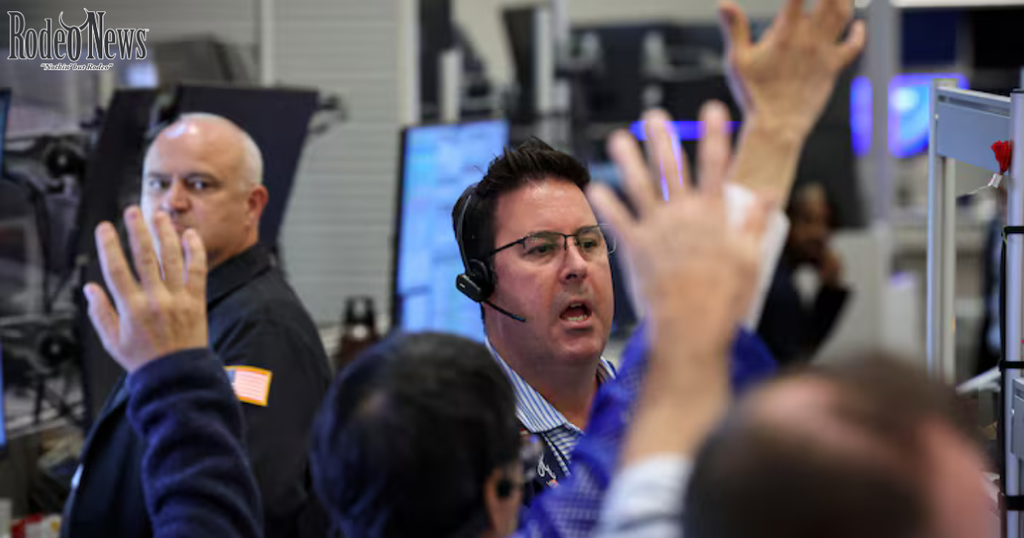
The moves came at a particularly sensitive moment for financial markets.
The Federal Reserve began a two-day policy meeting on Tuesday, with investors expecting an interest-rate increase as policymakers respond to renewed inflation pressure. At the same time, the benchmark 10-year Treasury yield moved above 5%, reaching its highest level since 2007, according to Reuters. RReuters
For investors, the combination creates a difficult environment.
Higher oil prices can push inflation upward. Higher Treasury yields increase borrowing costs and make future corporate earnings less valuable when discounted back to the present. Meanwhile, concerns about the enormous investment required to build artificial-intelligence infrastructure have added another source of uncertainty for technology stocks.
1. Oil Prices Are Raising New Inflation Concerns
Oil has become one of the most important drivers of market sentiment.
Crude prices surged as conflict in the Middle East disrupted energy infrastructure and raised concerns about the reliability of oil transportation through the region.
Reuters reported that front-month oil prices jumped sharply on Tuesday, while diesel futures reached record levels. The increase intensified concerns that higher energy costs could feed into broader inflation. RReuters
That matters because inflation is closely watched by the Federal Reserve.
When energy becomes more expensive, consumers and businesses can face higher transportation, manufacturing and operating costs. Companies may then attempt to pass some of those costs on to customers.
The result can be renewed pressure on consumer prices.
For the stock market, the problem is particularly significant when inflation rises at the same time that economic growth becomes uncertain.
Investors may begin to question whether interest rates can fall as quickly as previously expected.
2. Treasury Yields Have Become a Major Market Problem
Another major development was the increase in Treasury yields.
The benchmark 10-year U.S. Treasury yield moved above 5% on Tuesday, reaching levels not seen since 2007, according to Reuters. RReuters
The 10-year Treasury is closely watched because it influences borrowing costs throughout the U.S. economy.
Mortgage rates, corporate financing and other forms of borrowing can be affected by movements in longer-term Treasury yields.
For companies, particularly businesses that rely heavily on future growth and large capital investments, higher interest rates can become a significant burden.
Investors also compare stock returns with relatively low-risk government bonds.
When Treasury yields rise, bonds can become more attractive relative to stocks.
That does not automatically mean investors will abandon equities. But it changes the financial calculations behind stock valuations.
3. Why Higher Rates Matter for AI Stocks
The impact of rising yields is especially important for companies associated with artificial intelligence.
The AI investment boom has required enormous amounts of capital.
Technology companies are spending heavily on data centers, advanced processors, networking equipment, power infrastructure and other components needed to expand AI capacity.
Much of the expected payoff from those investments lies years in the future.
Higher interest rates make future cash flows less valuable when investors calculate their present value.
That can put additional pressure on high-growth companies whose stock valuations depend heavily on expectations for future earnings.
Reuters reported that semiconductor stocks underperformed amid concerns about the sustainability and social implications of the AI boom. RReuters
The issue is not simply whether AI demand is increasing.
Investors are also asking how much companies must spend to capture that demand and how quickly those investments will produce financial returns.
AI Anxiety Adds Another Layer of Uncertainty
The technology sector has faced another challenge in recent sessions.
Several major figures in the AI industry have raised concerns about the speed and potential consequences of AI development.
Those comments contributed to a selloff in AI-related stocks on Monday, with Nvidia among the companies affected.
Reuters reported that the Philadelphia Semiconductor Index underperformed as investors reassessed the AI investment story. RReuters
However, Tuesday’s market movements showed that AI concerns were only part of the picture.
Oil prices and Treasury yields were also major drivers of the broader market decline.
That distinction is important.
The current pressure on technology stocks cannot be attributed entirely to doubts about AI.
Macroeconomic conditions are playing a major role.
Wall Street’s Major Indexes Move Lower
The decline affected all three major U.S. stock indexes.
The Dow Jones Industrial Average, S&P 500 and Nasdaq Composite all finished lower on Tuesday. Reuters reported that energy was the only major S&P sector to gain. RReuters
The Nasdaq was particularly sensitive because of its concentration of large technology companies.
The technology sector has benefited substantially from the AI boom, but those companies can also be more sensitive to changes in interest rates and expectations for future growth.
The S&P 500 has broader exposure to financial, industrial, healthcare, consumer and energy companies.
That diversification can make its movements different from those of the technology-heavy Nasdaq.
Still, Tuesday’s decline demonstrated how quickly pressure in energy and bond markets can spread into equities.
Energy Stocks Stand Out
Energy was the notable exception.
Higher oil prices can increase revenue expectations for producers and other companies involved in the energy industry.
That helped the sector outperform the broader market.
The contrast between energy and technology illustrates how changing macroeconomic conditions can redistribute market leadership.
When oil prices rise sharply, energy companies may benefit while transportation companies, manufacturers and consumer businesses face higher costs.
Meanwhile, technology companies may experience pressure from higher interest rates.
The market can therefore move in different directions at the sector level even when the major indexes decline.
Why the Federal Reserve Matters
The Federal Reserve is at the center of the market’s attention this week.
Policymakers began their September meeting on Tuesday, with investors expecting an interest-rate increase. Reuters reported that the expected hike would be the first in more than three years. RReuters
The reason is renewed inflation pressure.
Higher oil prices complicate the Fed’s task because energy costs can feed directly into inflation while also influencing expectations about future prices.
If policymakers believe inflation risks are becoming more persistent, they may keep monetary policy tighter for longer.
That can weigh on economic activity.
Businesses face more expensive financing, consumers may face higher borrowing costs and investors may place lower valuations on companies with distant future earnings.
The Market Is Watching Oil Closely
Oil prices are particularly important because the current increase is connected to geopolitical developments.
The Middle East remains a crucial part of the global energy system.
Disruptions involving major production facilities, pipelines or shipping routes can quickly affect international oil prices.
Reuters reported that the latest increase followed escalating tensions and attacks affecting Saudi Arabia’s energy infrastructure. RReuters
The longer those disruptions continue, the greater the potential inflationary impact.
But oil prices can also reverse quickly if supply disruptions ease or geopolitical tensions decline.
That makes energy one of the most important variables for investors to monitor during the current period of uncertainty.
Higher Yields Could Affect Corporate Investment
Treasury yields also have implications beyond stock-market valuations.
Companies often evaluate investments by comparing expected returns with their financing costs.
When borrowing becomes more expensive, some projects become less attractive.
This is particularly relevant to the technology industry because AI infrastructure requires substantial capital.
Data centers can cost billions of dollars to build.
Companies also need electricity, specialized chips, cooling systems and high-speed networking infrastructure.
If financing costs rise significantly, investors may begin asking whether every planned AI investment will generate sufficient returns.
That question could influence technology valuations even if demand for AI products continues to grow.
Investors Are Also Watching Government Debt
The rise in Treasury yields reflects more than monetary policy expectations.
Concerns about U.S. government debt and the supply of Treasury securities are also part of the broader market discussion.
Higher government borrowing needs can increase the amount of debt that investors must absorb.
If demand does not keep pace, yields can rise to attract buyers.
The Reuters report noted that debt concerns were contributing to the market’s broader anxiety. RReuters
This creates an additional challenge for policymakers.
Higher Treasury yields increase borrowing costs for the government itself, potentially adding to future interest expenses.
At the same time, high yields can place pressure on households and businesses through the broader financial system.
Wall Street’s Decline Does Not Mean Every Sector Is Falling
Despite the overall decline, Tuesday’s market action was not uniform.
Energy stocks gained while several technology companies struggled.
There were also significant individual-stock movements.
Reuters reported that Dave & Buster’s shares fell sharply after disappointing revenue results, while Waystar rose amid reports involving a possible sale. RReuters
Market breadth was negative across both the New York Stock Exchange and Nasdaq, with declining stocks outnumbering advancing shares by roughly 2.5 to 1.
That suggests selling pressure was relatively broad rather than being limited to just a handful of large companies. RReuters
What Higher Oil Could Mean for Consumers
The consequences of higher oil prices can eventually reach households.
Gasoline and diesel prices are directly influenced by crude oil costs.
Transportation companies also face higher fuel expenses.
Those costs can spread through supply chains because trucks, ships and aircraft all require energy.
Food prices can also be affected indirectly because agriculture and food distribution depend heavily on transportation and fuel.
For consumers, this means that a prolonged oil-price increase could affect household budgets even if the initial disruption occurs far from the United States.
Markets Face Several Competing Signals
The current environment is unusual because several different forces are moving markets simultaneously.
Oil prices are rising.
Treasury yields are climbing.
Inflation expectations are under scrutiny.
The Federal Reserve is preparing to adjust interest rates.
And investors are debating whether the massive AI investment cycle can continue at its current pace.
Each factor alone could influence stock prices.
Together, they create a more complicated environment.
Investors therefore have to assess not only corporate earnings but also the interaction between energy markets, monetary policy, bond yields and technology spending.
What Investors Will Watch Next
The Federal Reserve’s policy decision will be one of the most important events for markets.
Investors will look closely at the rate decision, the central bank’s economic projections and policymakers’ comments about inflation.
Oil prices will remain another critical indicator.
Any change in Middle East tensions could quickly affect crude prices and, in turn, inflation expectations.
Treasury yields will also remain under close observation.
A sustained move above 5% would have implications for financing conditions across the economy.
Finally, technology investors will continue watching AI spending.
The central question is whether the enormous investments being made today can translate into sufficient revenue and profits in the future.
The Bigger Picture for Wall Street
The latest decline illustrates how interconnected modern financial markets have become.
A conflict in the Middle East can push oil prices higher.
Higher oil prices can increase inflation concerns.
Inflation concerns can affect Federal Reserve policy.
Monetary-policy expectations can push Treasury yields higher.
Higher yields can then pressure technology stocks and other companies whose valuations depend on future growth.
At the same time, concerns about AI spending can add another source of uncertainty to the technology sector.
That chain of events helps explain why Wall Street is reacting to developments far beyond corporate earnings.
The market is currently balancing geopolitical risk, inflation, interest rates, government debt and the future economics of artificial intelligence.
For now, higher oil prices and Treasury yields are the clearest sources of pressure.
Whether that pressure persists will depend heavily on developments in the Middle East, the Federal Reserve’s policy path and the ability of companies to demonstrate that their massive AI investments can generate sustainable returns.
For investors and businesses, the message from Tuesday’s trading session is clear: the market is no longer responding to a single story.
Energy prices, bond yields and technology expectations are increasingly connected, and developments in any one of those areas can quickly influence the direction of Wall Street.
Suggested external links
- Reuters — Wall Street and rising oil and Treasury yields
- AP — U.S. stocks, oil prices and Treasury yields
- Reuters — Stocks wobble as Treasury yields surge
- Reuters — Global markets and rising oil prices
Suggested internal-link placements
Since you haven’t provided the target domain, I haven’t fabricated internal URLs. If your site has relevant articles, consider linking these phrases:
- Federal Reserve → your latest Fed/interest-rate article
- Treasury yields → your bond-market explainer
- oil prices → your oil-market coverage
- AI stocks → your AI/technology market coverage
- Wall Street → your U.S. stock-market category
- Middle East tensions → your latest geopolitical-market article
SEO note: The focus keyword appears in the title, meta description, introduction and naturally throughout the article. The title is under 60 characters, and the meta description is under 160 characters. The article is structured for readability with short paragraphs and descriptive H2 sections.